




Specialized Sectors
Education
Retaining more students does not depend on demanding less. It depends on noticing them in time.
Around three in ten higher-education students in Peru leave their studies. Almost none do so overnight.
The industry challenge
No student drops out overnight. The signals appear months before anyone looks at them.
Attendance falls, assignments arrive late and participation fades. The information exists, but it is scattered across platforms nobody connects in time. Meanwhile, teachers spend much of their week grading and recording rather than supporting students. AI applied to academic analytics and personalization changes that order: it highlights who needs attention and frees the time to provide it.
The technology to close that gap exists. What is missing are teams that know how to apply it to the classroom, not the lab.
At JoyIT, AI-Powered engineering teams integrate Artificial Intelligence into personalized learning, academic management and administrative automation so institutions can focus on what matters most: their students.

Four fronts where AI changes institutional outcomes
01.Early dropout detection
Identify at-risk students before they leave. Models combine attendance, performance and participation to highlight who needs support weeks in advance, not at the end of the term.
02.Adaptive learning paths
Content and exercises adapt to each student's current level, so advanced students stay engaged and those falling behind do not accumulate gaps that become difficult to close.
03.Teacher workflow automation
Support for grading, feedback generation and academic record automation. Teachers review and decide; they do not transcribe.
04.Integrated educational ecosystem
Integration across the LMS, enrollment, billing and management systems brings complete student information to the people who can act on it.
The size of the opportunity, with the source in view
- Student dropout rate
- Course retention and completion
- Timely automated feedback

Many of your users are minors.
We protect sensitive information about underage students by defining roles, anonymization and strict security before using their data in tests, models or with suppliers.
Our process, with timelines in view
HeyFriends!
A digital communication and soft-skills training platform. We turned a method that existed only in live sessions into a web and app product that can sell independently and support users every day.
- UX/UI design
- Digital product (Web + App)
- Content strategy
- Web and app development
- Design System
HeyFriends! had a method that worked live with a group but stopped when the group left. The challenge was twofold: build a platform that explains and sells the program within seconds, and design an app that sustains practice for the rest of the month while engaging an audience that may not recognize its need to improve communication.
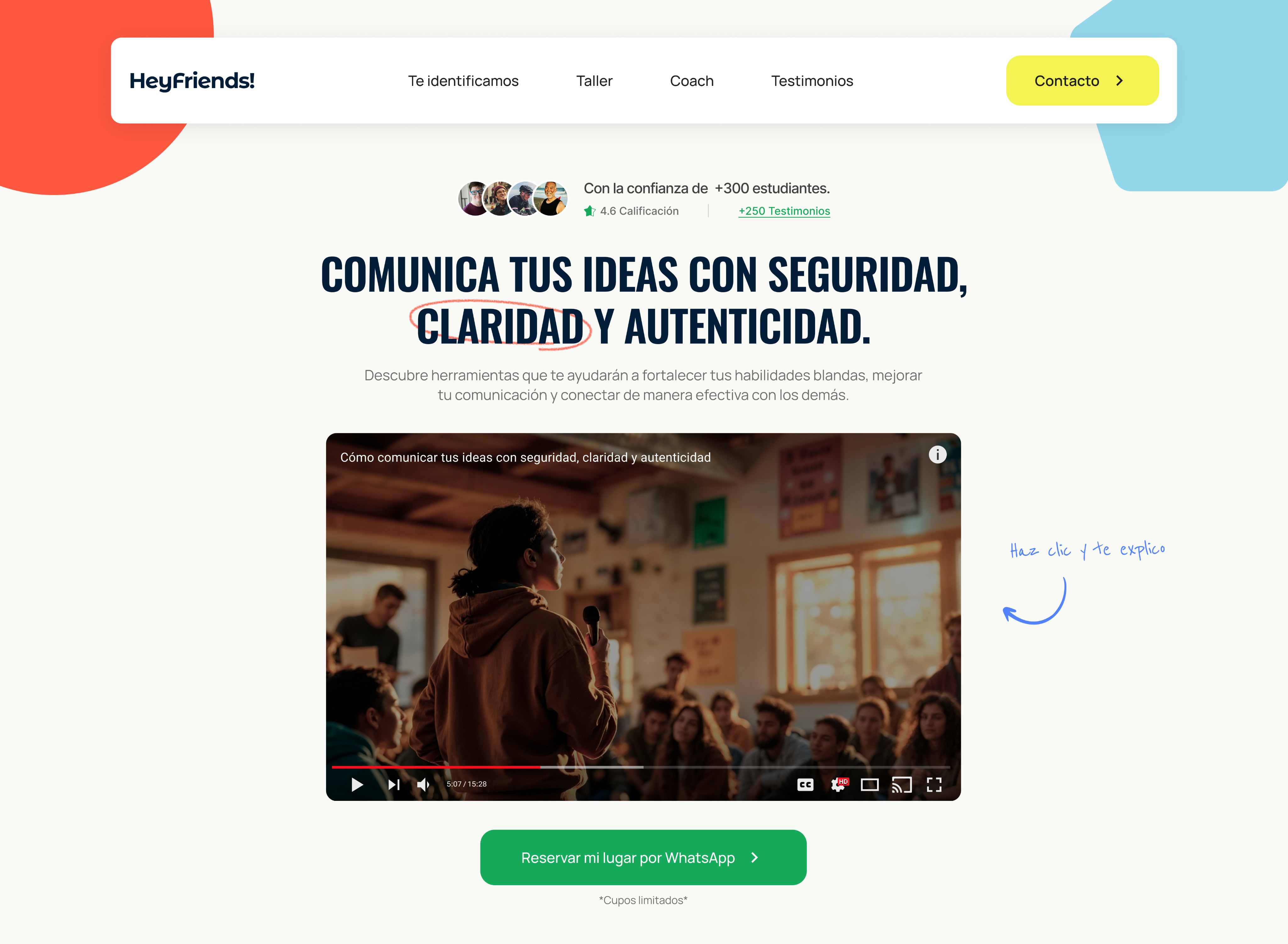
Web platform and app for a soft-skills training brand.
Will AI replace teachers?
No. We automate the parts of the job that do not require teaching judgment, such as recordkeeping, grading closed exercises and tracking progress, so teachers have more time to support students who need it.
Do you work with our current LMS and academic system, or must we migrate?
We work with what you already have. Most education AI projects do not require changing platforms, but connecting information currently split across enrollment, the LMS and management systems.
What happens to our students’ data, especially if they are minors?
We define roles, access and anonymization before writing the first line of code. Development and test environments do not use real student data without prior safeguards agreed with your legal team.
How long does it take to see a result?
The assessment takes two to three weeks. In education, results are measured by academic cycle, so the first complete reading comes at the end of the following semester, although early alerts start working sooner.
Do we own the code and models?
Yes. The intellectual property we build belongs to the client, with documentation so your team can operate and audit it independently.
Do we hire a project or a team?
Both options are available. In education, a team often works better because adoption is gradual and the solution evolves with each academic cycle.