




Specialized Sectors
Energy & Utilities
Operating more reliably does not depend on more infrastructure. It depends on knowing what will fail.
For every 100 kWh entering Peru’s distribution grid, around eight are lost before billing. The regional average is almost twice that figure.
The industry challenge
In energy, you cannot pass inefficiency on through pricing. Tariffs are regulated.
Assets age, demand becomes less predictable as renewables enter the mix, and grids need more investment each year. But revenue is set by the regulator, not the market. When prices cannot change, the real lever is operational: fewer failures, lower energy losses and better purchasing. AI applied to maintenance and forecasting addresses all three.
The technology to close that gap exists. What is missing are teams that know how to apply it to operations, not the lab.
At JoyIT, AI-Powered engineering teams integrate Artificial Intelligence into infrastructure monitoring, demand prediction and predictive maintenance, helping energy companies operate more efficiently and sustainably.

Four fronts where AI changes business outcomes
01.Predictive maintenance
Know which asset will fail before it does. Models use telemetry, failure history and work orders to turn unexpected outages into scheduled maintenance, with crews and spare parts already assigned.
02.Demand forecasting
Demand forecasting incorporates weather, seasonality and consumption patterns to reduce errors that are paid for in the spot market or through idle capacity.
03.Loss analytics
Monitoring and analytics across the distribution network locate energy losses and distinguish technical losses from other causes.
04.OT/IT cybersecurity
Stronger security where information and control systems meet protects service continuity when incidents occur.
The size of the opportunity, with the source in view
- Energy losses in Peru’s distribution grid
- Reduction in unplanned outages with predictive maintenance
- Annual grid investment required by 2030
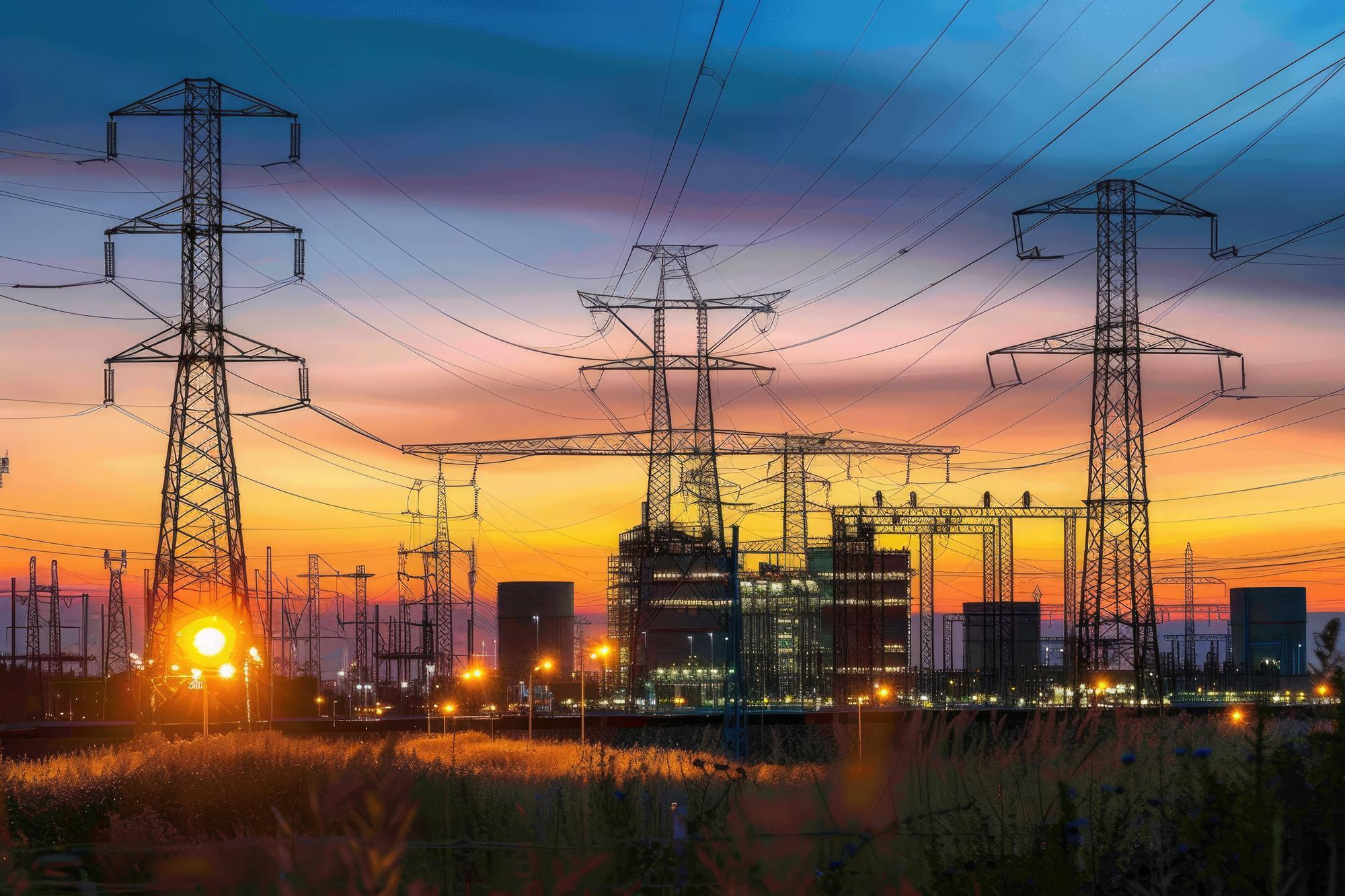
Here, an incident does not compromise data. It compromises supply.
Analytics requires connecting industrial control systems that were never designed for it. We protect operations by segmenting access and working with data replicas, not live systems.
Our process, with timelines in view
Energy
Digital platform for managing and monitoring sustainable energy operations.
- UX/UI design
- Energy management web platform
- Real-time asset monitoring
- Data and KPI visualization
- Operations and maintenance management
- Design System
Energy operations needed to centralize critical information and facilitate monitoring of assets, indicators and performance to improve decision-making.
Digital platform for managing and monitoring energy operations. Problem → Solution → Technology → Result
Do our control systems need an internet connection for this?
No. Most models operate on replicas of operational data, not control systems. The architecture is defined before coding, and segmentation between control and analytics environments is a design requirement, not a later decision.
Do you work with our existing systems, or must we migrate?
We work with what you already have. Most energy AI projects do not require changing platforms, but connecting the data your operation already records more effectively.
Do we need new sensors across all infrastructure?
Not to get started. Many models use existing failure history, maintenance orders and load curves. Additional instrumentation extends the scope; it is not a prerequisite.
How long does it take to see a result?
The assessment takes two to three weeks. The first measurable results usually appear within the first quarter, through a pilot limited to one asset family or network area.
Do we own the code and models?
Yes. The intellectual property we build belongs to the client, with documentation so your team can operate and audit it independently.
Do we hire a project or a team?
Both options are available. In energy, a team often works better because models need recalibration with each season and every change in network composition.