




Finance & Services
Fintech
Approving more does not depend on relaxing risk. It depends on reading data better.
According to Peru's SBS, 67% of adults had an account or digital wallet in 2025. Better assessment of those still excluded requires more than credit history.
The industry challenge
A traditional model does not reject bad payers. It rejects people with no history to show.
Antifraud systems block legitimate transactions to catch bad ones, and each false positive can mean a lost customer. AI applied to risk enables decisions using alternative signals and separates real fraud from noise without lowering control standards.
The technology to close that gap exists. What is missing are teams that can apply it within the regulatory framework, not outside it.
At JoyIT, AI-Powered engineering teams integrate Artificial Intelligence into fraud detection, credit scoring and process automation, helping fintech companies grow with confidence.

Four fronts where AI changes business outcomes
01.Alternative credit scoring
Credit decisions using more than credit history. Scoring models incorporate transactional behavior, alternative data and context to evaluate people traditional bureaus cannot assess, with the same risk controls.
02.Intelligent fraud prevention
Stop fraud without penalizing legitimate customers. Real-time detection calibrated to the cost of each error: blocking a legitimate transaction also has a cost, one that is rarely measured today.
03.Automated compliance
Comply without slowing down the product. KYC and AML automation and decision traceability built in from the start, so compliance becomes part of the flow instead of a manual review at the end.
04.Core integration and modernization
Connect to the core without rewriting it. Integration with the banking core, payment gateways and legacy systems brings new capabilities to the product without stopping existing operations.
The size of the opportunity, with the source in view
- Time in manual processes
- Delivery speed
- Risk detection capacity

In fintech, a poorly configured test environment can become a regulatory incident.
Transaction, identity and financial behavior data are subject to regulation. Copying production data into QA, training models or sharing information with third parties requires real controls. We define roles, anonymization and security measures before touching the system.
Our process, with timelines in view
Norvia
A digital credit and payments fintech operating in Mexico and Colombia.
- App and dashboard UX/UI
- Alternative credit scoring model
- Real-time fraud detection engine
- KYC and AML automation
- Risk decision traceability
- Banking core and payment gateway integration
Norvia rejected customers traditional bureaus could not assess, despite signals of repayment ability. Fraud detection could block transactions without considering the impact on good customers, while KYC and AML were reviewed manually at the end. Every core or gateway integration required changing legacy systems, putting operations at risk.
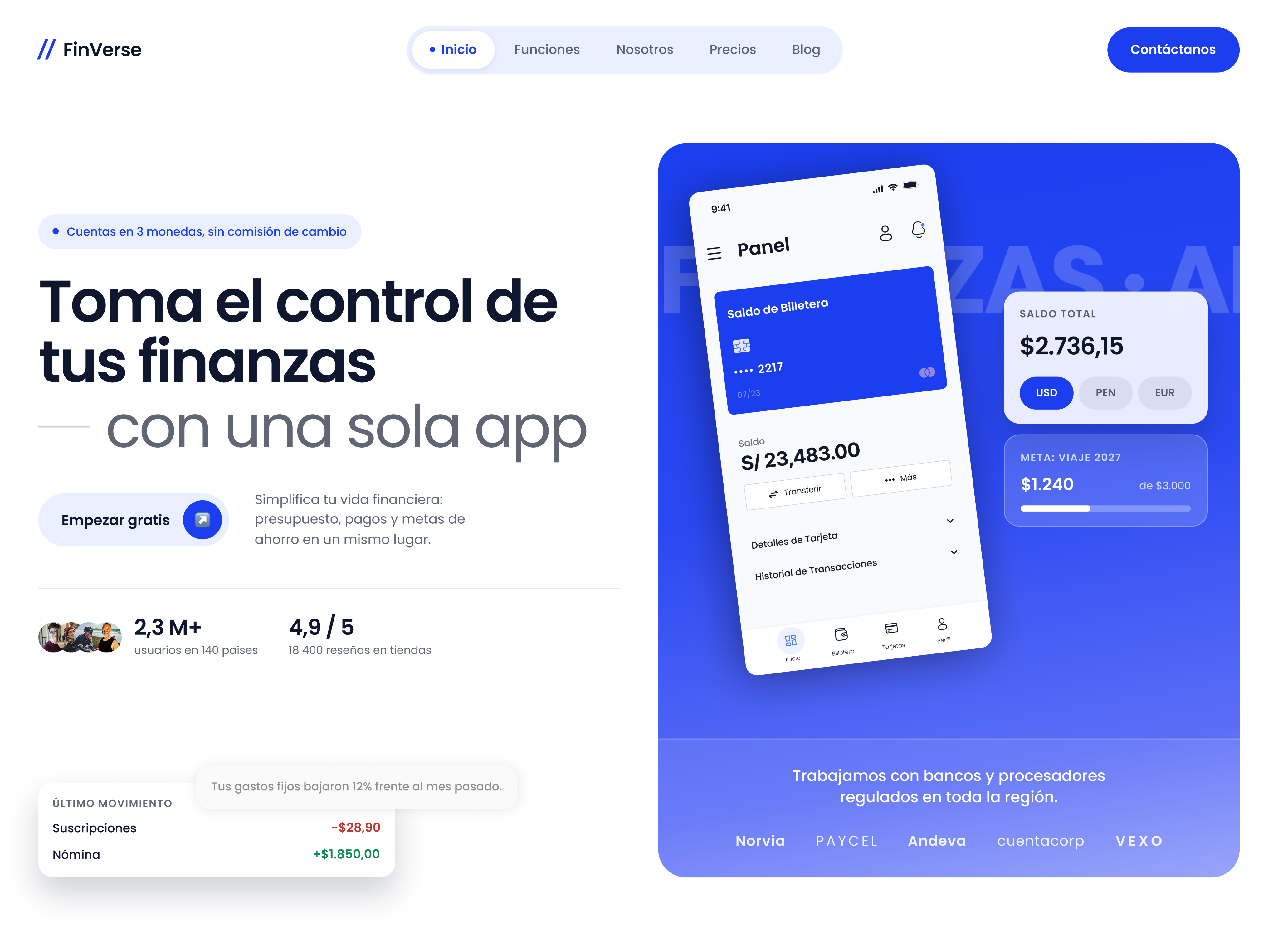
App and dashboard for digital credit and payments
Do you work with our current core, or must we migrate?
We work with what you already have. Most fintech AI projects connect existing operational data rather than replace the core.
How can a model decision be explained to regulators or customers?
Explainability is a design requirement, not an add-on. We use models and traceability to show why an application was approved or rejected, with a record of the variables that shaped the decision.
What happens to our customers’ data during development?
We define roles, access and anonymization before writing the first line of code. Development and test environments do not use real data without a treatment plan agreed with your risk and legal teams.
How long does it take to see a result?
The assessment takes two to three weeks. The first measurable results usually appear in the first quarter, through a pilot limited to one segment or product type.
Do we own the code and models?
Yes. The client owns the intellectual property we create, with documentation so your team can operate and audit it without us.
Do we hire a project or a team?
Both models are available. In fintech, a dedicated team often works better because the product changes with each regulatory cycle and each new insight from the model.