



Business & Commerce
Logistics
Delivering faster does not depend on a larger fleet. It depends on better decisions.
According to the National Logistics Survey, logistics costs amount to 16% of sales in Peru. Reducing them frees up margin.
The industry challenge
Last-mile delivery accounts for more than half the cost of a shipment. Yet it remains the part with the least data.
Routes are still planned with models that assume stable traffic, demand and delivery windows that no longer exist. AI-powered routing and forecasting reduce demand error by 20% to 50%, lowering cost per delivery, empty miles and rescheduling.
The technology to close that gap exists. What is missing are teams that know how to apply it to operations, not the lab.
At JoyIT, we build AI-Powered engineering teams that bring Artificial Intelligence into routing, fleet management, demand prediction and traceability, making every movement in the chain faster, more visible and more profitable.

Four fronts where AI changes operational outcomes
01.Intelligent, adaptive routing
Plan routes around reality, not averages. Optimization engines recalculate sequence, loads and delivery windows based on traffic, cost and actual fleet capacity, rather than last week’s route plan.
02.Automated real-time traceability
See the shipment, not a report about it. Real-time tracking across the systems you already use (TMS, WMS and ERP), with deviation alerts and an ETA customers can check without calling support.
03.Predictive demand and capacity models
Anticipate demand and capacity. Forecasting models size volume by area and season so you can plan fleet, staffing and warehouse space before the peak, rather than during it.
04.Predictive fleet and infrastructure management
Maintain the fleet before it fails. Predictive maintenance using telemetry and work orders turns unplanned stops into scheduled maintenance.
The size of the opportunity, with the source in view
- Share of shipping cost from the last mile
- Coresight Research, 2016 estimate
- Reduction in demand forecasting error
- McKinsey & Company
- Reduction in unplanned stops with predictive maintenance
- McKinsey & Company

Your TMS and WMS know your customers better than your CRM.
Addresses, delivery schedules, contacts and consumption patterns. Copying production data to QA, training models or sharing data with outside operators carries legal risks. We define roles, anonymization and security measures before touching the system.
Measurable results, not promises
RutaNorte
A ground freight transportation company with operations.
- Operations platform UX/UI design
- Multi-country intelligent routing engine
- Real-time traceability dashboard
- Demand forecasting module by area
- Predictive fleet maintenance
- Integration with existing TMS, WMS and ERP systems
RutaNorte planned routes using historical averages and spreadsheets, causing constant deviations, missed delivery windows and a fleet that learned about mechanical failures while already on the road. Shipment visibility depended on customer-service calls, and expansion into three countries made that way of working impossible to scale.
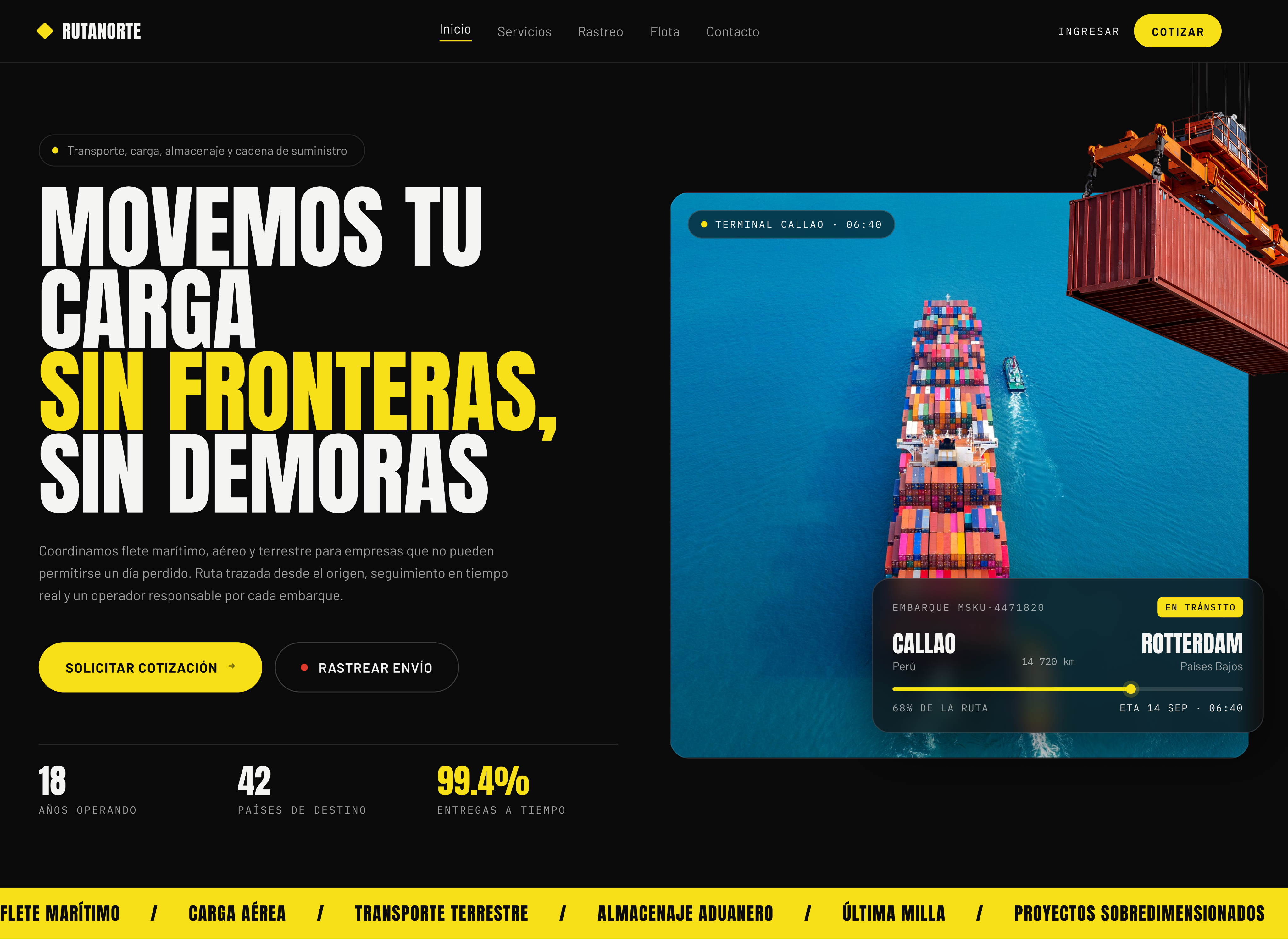
Multi-country logistics routing and traceability platform
What we are asked before getting started
Do you work with our current TMS, or do we have to migrate?
We work with what you already have. Most logistics AI projects do not require replacing the platform; they require better connections between the data your operation already generates.
How long does it take to see a result?
The assessment takes two to three weeks. The first measurable results in routing or visibility usually appear within the first quarter, starting with a pilot limited to one area or service type.
What if our fleet data is incomplete?
That is the most common scenario. We start with what exists and prioritize what else to capture according to business impact, not what an ideal model would demand.
Do we need telemetry or GPS across the entire fleet?
Not to get started. Many forecasting and planning models work with order histories and delivery times. Telemetry expands the scope; it is not an entry requirement.
Do we own the code and models?
Yes. The client owns the intellectual property in what we build, and we document it so your team can operate it without us.
Do we hire a project or a team?
Both formats are available. In seasonal operations, a team that scales up for peaks and adjusts during quieter periods often works better than a fixed scope.