




Business & Commerce
Mining
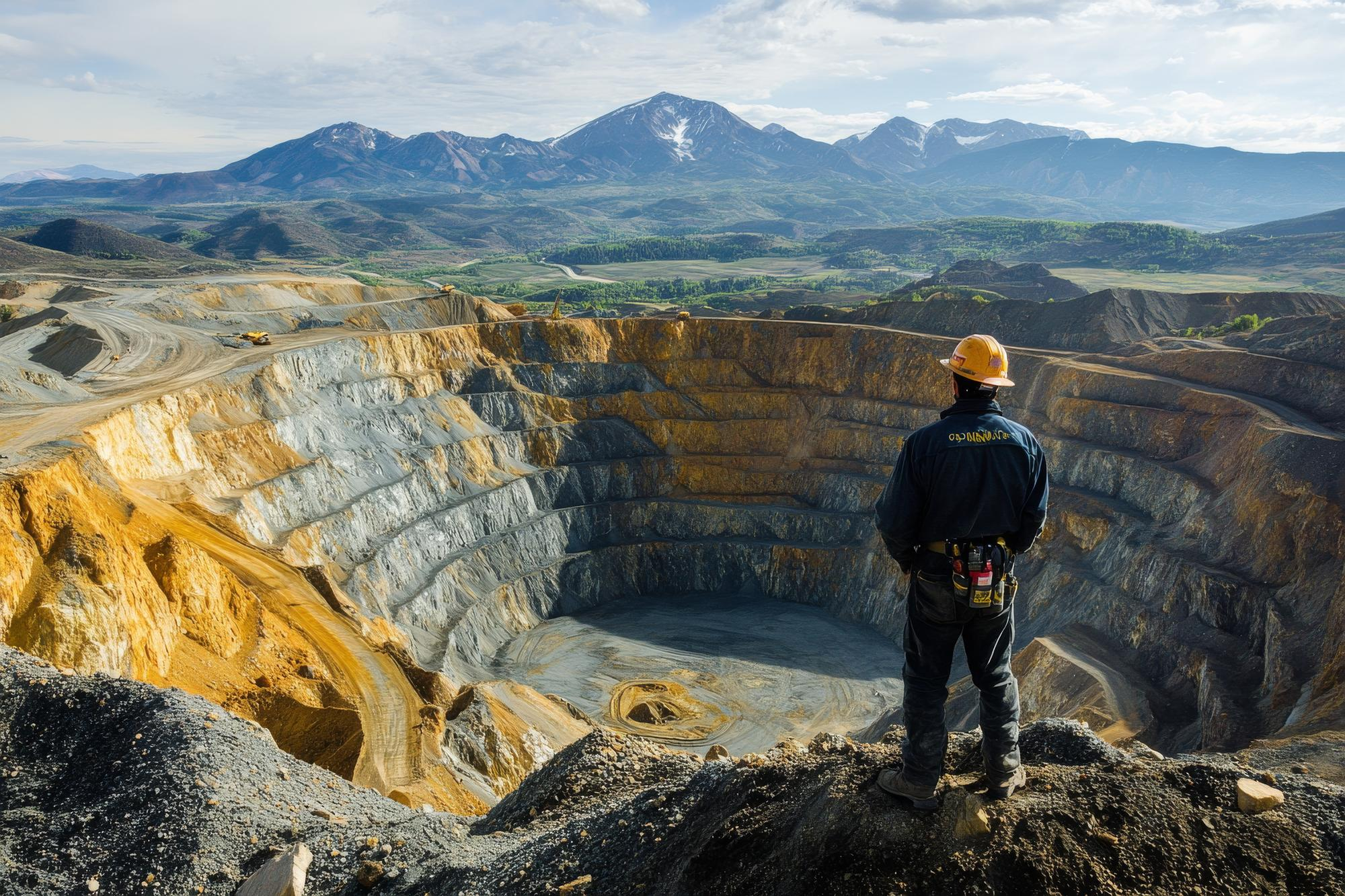
Extracting more mineral does not depend on moving more rock. It depends on moving what you already move more effectively.
Mining accounts for around 60% of Peruvian exports. Its productivity is not just an industry issue: it is the largest variable in the country’s economy.
The industry challenge
Every year, more rock must be moved to obtain the same metal. Prices do not adjust to that reality.
Average ore grades have fallen for decades while energy, water and material-handling costs rise. Metal prices are set by international markets. When revenue per tonne cannot change, the real lever is operational: fleet availability, plant recovery and energy consumption per processed tonne.
The technology to close that gap exists. What is missing are teams that know how to apply it to mining operations, not the lab.
At JoyIT, AI-Powered engineering teams integrate Artificial Intelligence into fleet maintenance, plant optimization, operational safety and traceability to get more value from every tonne moved.

Four fronts where AI changes operational outcomes
01.Predictive fleet maintenance
Telemetry, failure history and work orders anticipate downtime in trucks, shovels and critical equipment. A lost truck hour cannot be recovered on the next shift.
02.Metallurgical recovery optimization
We connect feed and process parameters to anticipate variations and improve recovery from available ore.
03.Intelligent incident prevention
Fatigue, proximity and operating-condition signals help detect risks before incidents occur.
04.Integrated mining operations
We connect dispatch, maintenance and plant systems to deliver complete, traceable information to decision-makers.
The size of the opportunity, with the source in view
- Mining share of Peruvian exports
- Global electricity consumed by crushing and grinding
- Reduction in unplanned downtime through predictive maintenance
Your mine plan moves your share price.
Reserves, grades, projections and costs are sensitive information. Copying production data to tests, training models or sharing data requires specific controls. We define roles, anonymization and security before touching the system.
Our process, with timelines in view
Arqmin
An open-pit mining operation and concentrator plant running three continuous shifts.
- Predictive maintenance for truck and shovel fleets
- Metallurgical recovery analytics in the concentrator plant
- Fatigue monitoring and proximity alerts in continuous operations
- Integration of dispatch, maintenance, plant and planning
- Decision traceability from mine to business
Arqmin operates three continuous shifts across an open pit and concentrator plant. Every unavailable truck or shovel represents unrecoverable time. Feed variations affected recovery before teams noticed the decline. Fatigue and proximity risks were managed after incidents, while dispatch, maintenance and plant data had to be manually reconstructed at each closing, never reaching decision-makers complete.
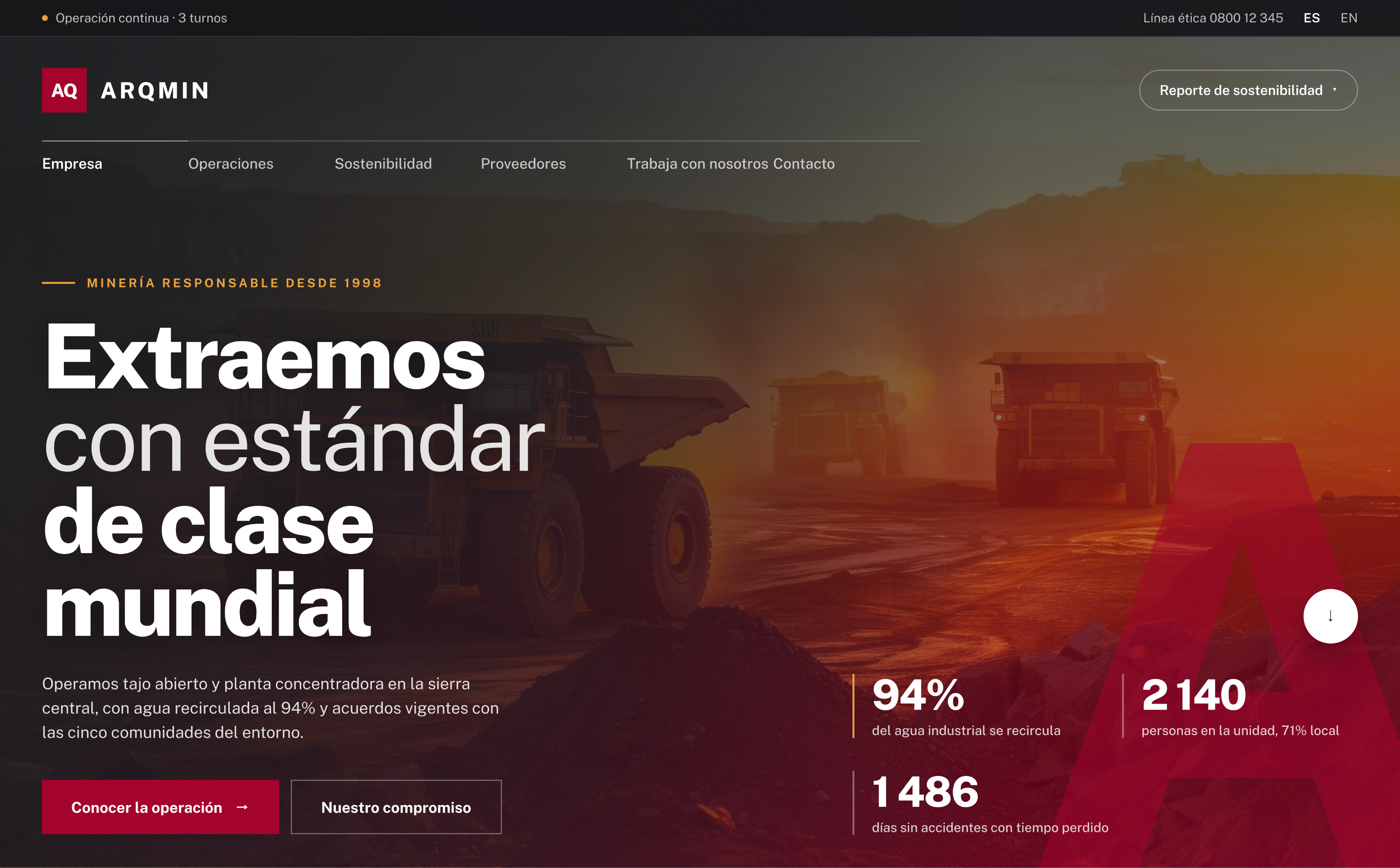
Predictive maintenance and operational monitoring platform for Cerro Alto Unit Problem → Solution → Technologies → Result
Can this work at a site without full connectivity?
We design local capture and processing where appropriate, synchronizing when connectivity returns.
Do you work with existing dispatch, maintenance and plant systems?
Yes. We assess integrations and connect existing systems without requiring a complete migration.
How do you handle reserve and mine-plan information during development?
Role-based access, separate environments, anonymization and traceability protect sensitive information.
How long does it take to see a result?
We prioritize a measurable pilot in one unit or process and scale after validating impact.
Do we own the code and models?
Yes. We agree on intellectual property and knowledge transfer from the start.
Do we hire a project or a team?
We can deliver a defined project or embed a specialized team in your operation.