




Specialized Sectors
Healthcare
Serving more patients does not depend on more medical hours. It depends on giving doctors their time back.
Peru has around 14 doctors per 10,000 inhabitants. The WHO threshold for basic coverage is much higher. Hiring alone cannot close that gap.
The industry challenge
For every hour with a patient, doctors spend almost two on records. The shortage of medical hours starts there.
Meanwhile, schedules fill with missed appointments, urgent cases wait alongside routine ones, and medical records live in systems that do not communicate across sites. AI applied to documentation, triage and scheduling does not replace clinical judgment: it frees time spent on tasks that do not require a doctor.
The technology to close that gap exists. What is missing are teams that know how to apply it to clinical practice, not the lab.
At JoyIT, AI-Powered engineering teams integrate Artificial Intelligence into clinical documentation, triage support and patient experience safely and responsibly.

Four fronts where AI changes operational outcomes
01.Give clinical teams their hours back
Assisted transcription and structuring of clinical notes, medical history summaries and automatic completion of administrative fields. Doctors review and sign; they do not transcribe.
02.Prioritize those who cannot wait
Triage and study review support orders the queue by actual urgency. The decision remains with the professional but no longer depends on arrival order.
03.Make scheduled appointments happen
Scheduling, reminders and no-show prediction, plus telehealth channels for follow-ups that do not require an in-person visit.
04.Connect medical records with the rest of the system
Interoperability across facilities, labs, pharmacies and insurers brings complete patient information to the point of care.
The size of the opportunity, with the source in view
- Time in administrative work
- Waiting time in triage
- Medical record availability

Medical records are the most sensitive data there is. They also pass through the most hands.
Healthcare data governance and privacy. Roles, anonymization and security are defined before moving data across sites, laboratories, insurers or AI models.
Mindora
See how we transform technology challenges into products, solutions and capabilities that make an impact.
- UX/UI design
- AI Product Designer
- App
- BackOffice
- Design System
Create a digital experience that uses AI-powered tools to simplify professionals’ management tasks and facilitate access to appropriate support.
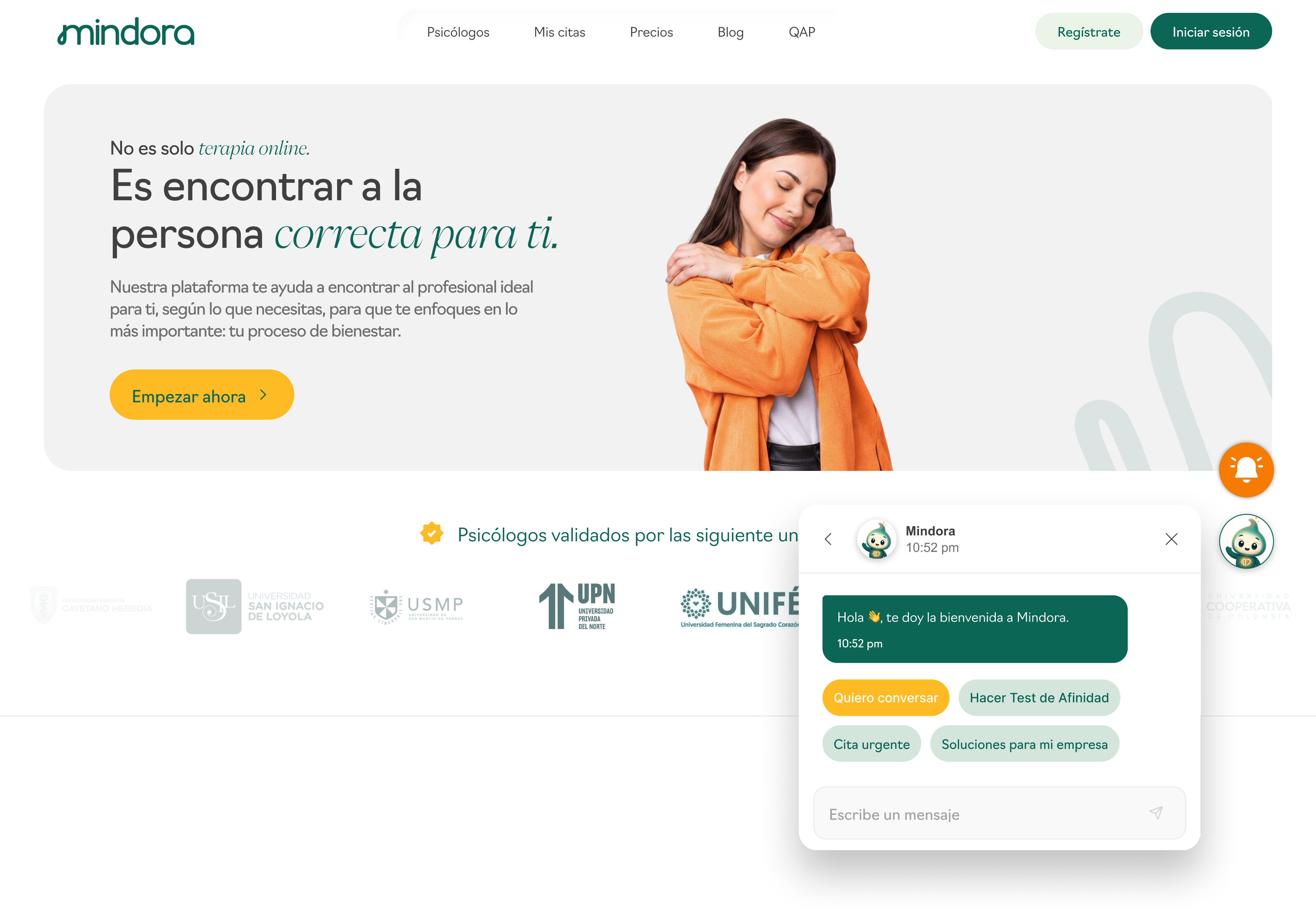


Digital mental-health intermediary platform Problem → Solution → Technologies → Result
Will AI diagnose patients for our doctors?
No. What we build assists, organizes and documents; clinical decisions remain with the professional. We design systems to show the basis of each suggestion so doctors can evaluate it rather than simply accept it.
Do you work with our current medical-record system, or must we migrate?
We work with what you already have. Most healthcare AI projects do not require changing systems, but connecting the information your operation already records more effectively.
What happens to patient data during development?
We define roles, access and anonymization before writing the first line of code. Development and test environments do not use real clinical data without prior safeguards agreed with your legal and quality teams.
How long does it take to see a result?
The assessment takes two to three weeks. The first measurable results usually appear within the first quarter, through a pilot limited to one specialty or facility.
Do we own the code and models?
Yes. The intellectual property we build belongs to the client, with documentation so your team can operate and audit it independently.
Do we hire a project or a team?
Both options are available. In healthcare, a team often works better because clinical adoption is gradual and the solution evolves with each service's real use.